
Application Objective
Define whether the mineral is expected to provide filling, film build, surface control, reinforcement, processing support, barrier contribution or cost optimization.
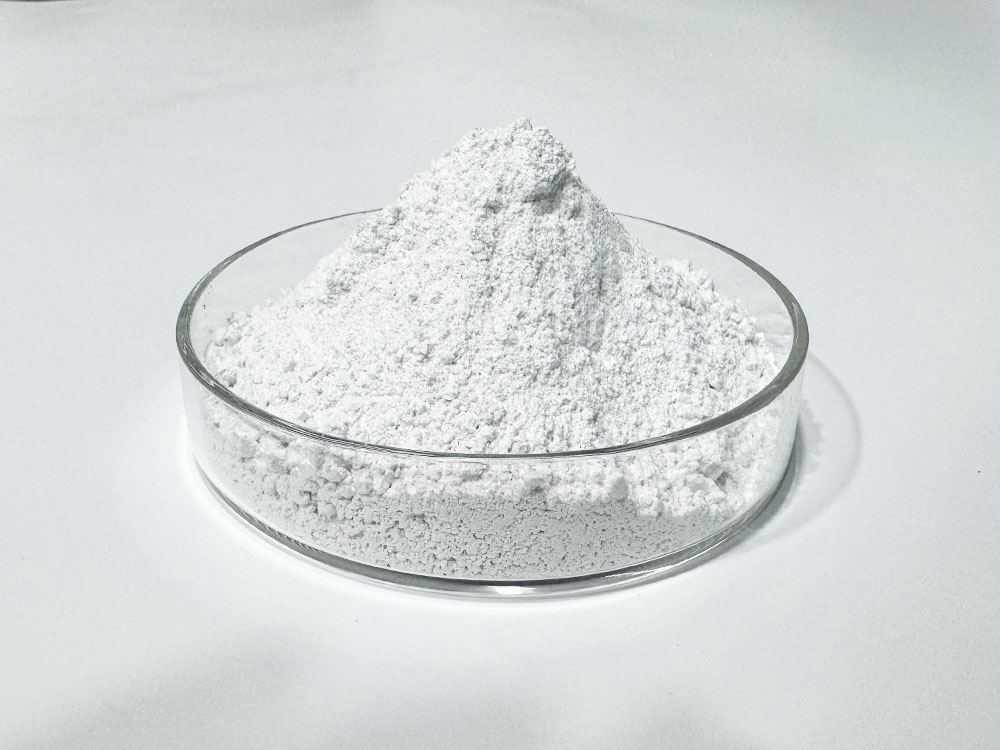
Talc, calcium carbonate and dolomite for coatings, plastics, rubber, construction materials, adhesives and sealants—reviewed against the formulation, process and target specification rather than offered as interchangeable fillers.
Talc, calcium carbonate and dolomite are reviewed according to the application, required chemistry, particle characteristics, appearance and processing conditions.
Define whether the mineral is expected to provide filling, film build, surface control, reinforcement, processing support, barrier contribution or cost optimization.
Share the current grade, specification, certificate of analysis or physical sample so the comparison is grounded in an existing benchmark.
Review particle-size target, mineral composition, whiteness, moisture, loss on ignition and other parameters that matter to the application.
Identify the binder, resin, elastomer, additives, dosage and any interactions that may affect dispersion or finished-product behaviour.
Consider mixing, extrusion, coating application, filtration, temperature, shear and equipment limitations.
Confirm expected volume, packing, handling and the commercial basis only after the technical direction is sufficiently clear.
A defined range of talc, calcium carbonate and dolomite makes the first comparison clearer than an unstructured catalogue.
Product discussion starts with the application, specification and process rather than a generic sales description.
Existing data can be compared against available directions to identify realistic gaps before a trial is arranged.
The enquiry moves toward a defined grade, sample, packing discussion or request for missing technical information.
Share the application, current product or target specification, relevant particle-size and chemical requirements, binder or polymer system, planned loading, processing method, expected volume and packing requirement. This gives us a practical basis for comparing the available product directions.
They differ in mineral chemistry, particle characteristics and the functions they can provide in a formulation. They should not be treated as automatic substitutes for one another. The correct choice depends on the required filling, surface, processing, mechanical or cost objective.
Talc, calcium carbonate and dolomite can all be relevant, but for different reasons. Selection should consider film build, surface finish, suspension, rheology, mineral loading, binder compatibility and the required balance between performance and formulation cost.
Yes. A current specification, certificate of analysis or reference sample can be used to identify the closest available product direction. Final equivalence and suitability still need to be confirmed in the customer’s own formulation and process.
Yes. Packing is reviewed after the product direction, expected volume and handling requirement are clear. Available packing should be confirmed for the selected grade before quotation.
Share the application, current specification or reference product, relevant particle and chemical requirements, processing method, expected volume and packing need. We will identify the most credible starting direction for evaluation.